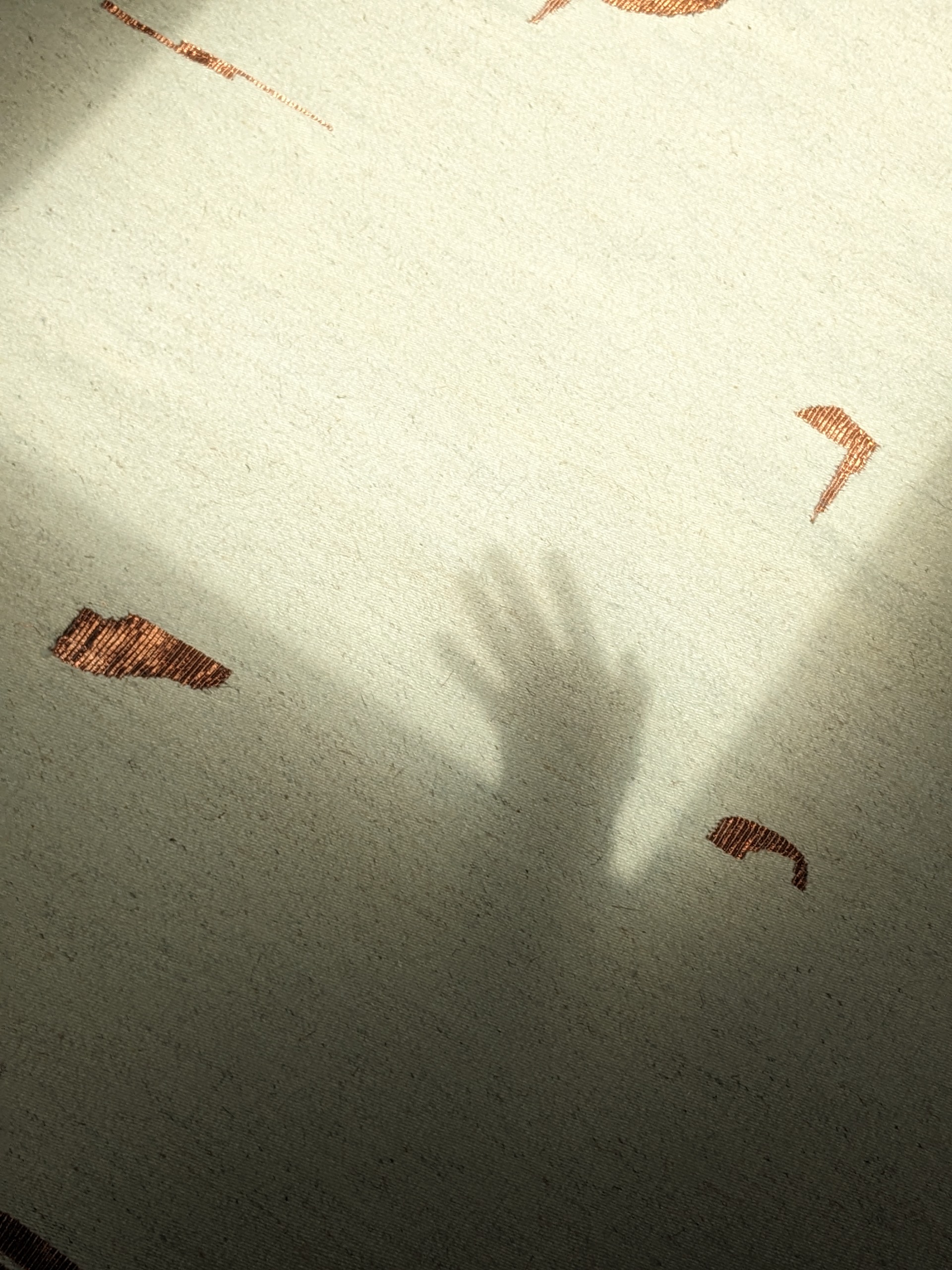
Sarah Hô est une artiste basée à Montolieu dans la Montagne noire. Diplômée en 2015 des ateliers de tapisserie d’art de l’ESAA Duperré, elle utilise le textile comme un langage. Dans son étymologie première, le textile est indissociable du texte : tous deux trouvent racine dans le verbe texere : « composer», « entrelacer », « tramer », « raconter ». Ainsi, Sarah Hô propose des formes narratives où chaque pièce propose une lecture croisée : la sienne et celle du spectateur. Sur les surfaces tissées se déposent nos regards et s’ouvrent nos imaginaires : Les Plateformes, le tapis sonore Colporteur, où encore Prise de terre sont autant d’espaces de projection, d’interprétations et de perceptions du monde, communes et singulières à la fois. Glaner, récolter, récupérer et croiser les fibres engage une appréhension matérielle et sensible du monde. Ici, le sens se construit autant par l’agencement que par ce geste universel, ancestral et fondateur – celui d’entrecroiser quatre brindilles aux abords d’un chemin de promenade – inscrivant ainsi son travail dans un lien étroit avec les lieux habités, leurs histoires, leurs mémoires et leurs ressources.
• Sarah Hô is an artist based in Montolieu, in the Montagne Noire region. A 2015 graduate of the fine art tapestry workshops at ESAA Duperré, she uses textiles as a language. Etymologically, textiles are inseparable from text; both share roots in the verb texere—meaning to compose, intertwine, weave, or tell a story. Sarah Hô thus creates narrative forms in which each piece invites a dual reading: her own and that of the viewer. Our gazes rest upon these woven surfaces, and our imaginations take flight: works such as Les Plateformes, the sound-based Colporteur rug, and Prise de terre serve as spaces for projection, interpretation, and perception of the world—spaces that are at once shared and unique. The acts of gleaning, harvesting, reclaiming, and interweaving fibers foster a tangible, sensory engagement with the world. Here, meaning emerges as much from the arrangement of materials as from a universal, ancestral, and foundational gesture—like interlacing four twigs along a walking path—thereby anchoring her work in a close relationship with inhabited places, their histories, their memories, and their resources.